
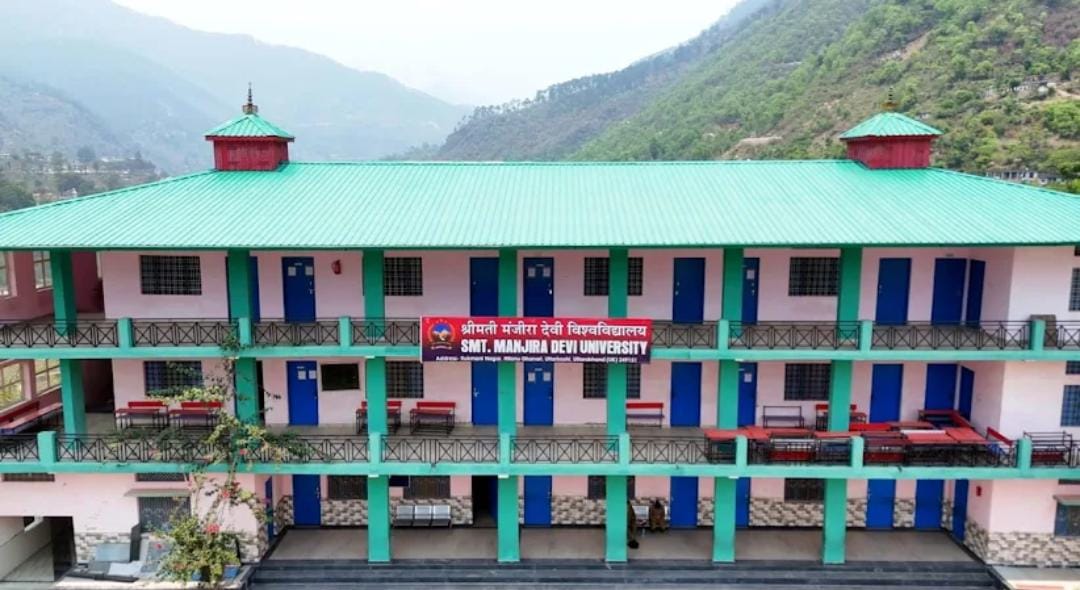
19 Mar Smt Manjira Devi Ayurvedic Medical College & Hospital, Uttarkashi – 2026-27
Nestled in the foothills of the majestic Himalayas, Smt Manjira Devi Ayurvedic Medical College & Hospital Uttarkashi is a premier institution dedicated to providing holistic healthcare and education in the field of Ayurveda. Established in 1995, the college has been at the forefront of promoting Ayurveda, the ancient Indian system of medicine, and its benefits to the world. The college has a well-qualified and experienced faculty who are committed to providing students with the best possible education. The faculty members are actively involved in research and have published extensively in national and international journals.
Ayurveda, derived from the Sanskrit words “Ayur” (life) and “Veda” (knowledge), is more than just a medical system—it’s a philosophy of living in harmony with nature. Originating over 5,000 years ago in ancient India, Ayurveda emphasizes balance among the body, mind, and spirit through diet, herbal remedies, yoga, meditation, and detoxification therapies like Panchakarma. In today’s fast-paced world, where stress-related illnesses and chronic diseases are rampant, Ayurveda offers natural, preventive solutions that align with modern wellness trends. Smt. Manjira Devi Ayurvedic Medical College & Hospital embodies this ancient wisdom, training the next generation of Ayurvedic practitioners while providing affordable healthcare to the local community in Uttarkashi.
Uttarkashi, often called the “Devbhoomi” (Land of Gods), is a district in Uttarakhand known for its spiritual significance, being home to sacred sites like Gangotri and Yamunotri. The college’s location in Hitanu Dhanari, Dunda, adds to its appeal—surrounded by lush greenery, pristine rivers, and snow-capped peaks, it provides an ideal environment for learning and healing. The fresh mountain air, coupled with the tranquility of the Himalayas, enhances the therapeutic aspects of Ayurvedic studies. Students here not only gain academic knowledge but also experience the practical benefits of living in a pollution-free zone, which aligns perfectly with Ayurveda’s emphasis on environmental harmony.
History and Establishment
The roots of Smt. Manjira Devi Ayurvedic Medical College & Hospital trace back to the vision of providing quality education in traditional medicine to underserved regions. Established in 2015 (though some sources note the group’s inception in 2004), the institution is part of the Smt. Manjira Devi Group of Institutions. It was founded with the mission to blend ancient Ayurvedic principles with modern educational standards, ensuring graduates are well-equipped to meet contemporary healthcare challenges. The college is named after Smt. Manjira Devi, symbolizing dedication to women’s empowerment and community service in education.
Approved by the National Commission for Indian System of Medicine (NCISM) and affiliated with Uttarakhand Ayurved University (UAU), Dehradun. This affiliation ensures that its programs are recognized nationwide, allowing graduates to practice Ayurveda legally across India. The hospital component was integrated to provide hands-on clinical training, making it a comprehensive center for both education and patient care.
Over the years, the institution has grown from a modest setup to a full-fledged Ayurvedic hub. In its early days, it focused on basic infrastructure, but investments in facilities and faculty have elevated it to one of Uttarakhand’s prominent Ayurvedic colleges. The group’s expansion includes ties to Smt. Manjira Devi University, which oversees broader educational initiatives in the region. This evolution reflects a commitment to holistic development, incorporating not just medical education but also research and community outreach programs.
Ayurveda’s history itself is intertwined with institutions like this. From the ancient texts of Charaka and Sushruta to modern revivals post-independence, Ayurveda has seen a resurgence. In Uttarakhand, with its rich biodiversity of medicinal herbs, colleges like Smt. Manjira Devi play a crucial role in preserving this heritage. The college’s establishment in a rural Himalayan area addresses the healthcare gap in remote regions, where allopathic medicine is often inaccessible.
Location and Campus Overview: A Haven in the Himalayas
Situated in Rukmani Nagar, Hitanu Dhanari, Dunda, Uttarkashi, the campus spans a verdant area that feels like a natural retreat. Uttarkashi’s coordinates (approximately 30.73°N, 78.45°E) place it at an elevation of about 1,158 meters, offering a cool climate year-round—perfect for focused studies and rejuvenating therapies. The journey to the college involves scenic drives through pine forests and along the Bhagirathi River, enhancing the sense of arriving at a sanctuary.
The campus is designed with eco-friendly principles, featuring green lawns, herbal gardens, and pathways lined with medicinal plants. Classrooms are spacious and ventilated naturally, reducing the need for artificial cooling. The architecture blends modern amenities with traditional elements, like courtyards for yoga sessions. Security is tight, with 24/7 surveillance and gated entry, ensuring a safe environment for students, especially females.
Nearby attractions include the Vishwanath Temple and adventure spots for trekking, which students can explore during breaks. The location’s proximity to herbal hotspots allows for field trips to collect rare plants like Brahmi and Ashwagandha, integral to Ayurvedic pharmacology. This setting not only aids learning but also promotes mental well-being, as studies show that nature exposure reduces stress—a core Ayurvedic tenet.
Courses Offered: Diving Deep into Ayurvedic Education
The flagship program at Smt. Manjira Devi Ayurvedic Medical College is the Bachelor of Ayurvedic Medicine and Surgery (BAMS), a 5.5-year undergraduate degree including a 1-year compulsory internship. With an intake capacity of 60 seats, it covers a comprehensive curriculum blending ancient wisdom with modern sciences.
BAMS Curriculum Breakdown
The BAMS program is divided into four professional years, each building on the last:
-
First Professional Year (1.5 years): Focuses on foundational subjects like Padartha Vigyan (fundamental principles), Ayurved Itihas (history), Sanskrit (for reading ancient texts), Kriya Sharir (physiology), Rachana Sharir (anatomy), and Maulik Siddhant with Ashtang Hridaya (basic principles). Students learn about the three doshas (Vata, Pitta, and Kapha) and how imbalances cause diseases. Practical sessions include dissections and physiological experiments.
To elaborate, Padartha Vigyan introduces concepts like Dravya (matter) and Guna (qualities), essential for understanding herbal properties. Sanskrit classes ensure students can interpret original scriptures, preventing misinterpretations in practice.
-
Second Professional Year (1 year): Covers Dravyaguna Vigyan (pharmacology), Roga Nidan (pathology), Swasthavritta (preventive medicine), Rasashastra (alchemy and minerals), and Charak Samhita (internal medicine). Here, students study over 500 herbs, their collection, processing, and therapeutic uses. Roga Nidan teaches diagnostic techniques like pulse reading (Nadi Pariksha) and tongue examination.
Swasthavritta emphasizes lifestyle regimens, including Dinacharya (daily routine) and Ritucharya (seasonal routine), which are increasingly relevant in preventive healthcare amid rising lifestyle diseases like diabetes.
-
Third Professional Year (1 year): Includes Agadtantra (toxicology), Prasuti Tantra and Stri Roga (obstetrics and gynecology), Kaumarbhritya (pediatrics), and Charak Samhita (Uttarardha). Toxicology covers poison management using Ayurvedic antidotes, while women’s health focuses on natural childbirth and menstrual disorders.
Kaumarbhritya addresses child nutrition and immunity, drawing from texts like Kashyapa Samhita, offering alternatives to conventional pediatrics.
-
Fourth Professional Year (1 year): Encompasses Kayachikitsa (general medicine), Panchkarma (detox therapies), Shalya Tantra (surgery), Shalakya Tantra (ENT and ophthalmology), and Research Methodology. Panchkarma, a highlight, involves five purification methods: Vamana (emesis), Virechana (purgation), Basti (enema), Nasya (nasal administration), and Raktamokshana (bloodletting).
Surgery in Ayurveda, though minimally invasive, includes techniques like Kshara Sutra for fistulas, which has high success rates with low recurrence.
The internship is structured: for 6 months, it’s distributed across departments like Kayachikitsa (2 months), Shalya (1 month), etc. For 12 months, it’s extended, ensuring thorough clinical exposure.
Other courses mentioned in group institutions include D.Pharm, but the core is BAMS. The curriculum integrates modern subjects like anatomy and pathology, making graduates versatile.
Preservation of Ancient Wisdom:
At Smt Manjira Devi Ayurvedic Medical College, the essence of Ayurveda resonates in every aspect of its curriculum and practices. Rooted in ancient texts like the Charaka Samhita and Sushruta Samhita, students delve into the depths of Ayurvedic principles, learning the intricate balance between the body, mind, and spirit. Under the guidance of seasoned practitioners and scholars, they unravel the secrets of herbal medicine, therapeutic treatments, and dietary regimens that have sustained communities for millennia.
Integration of Modern Science:
While honoring tradition, the college also embraces modern scientific methodologies and technologies to enrich Ayurvedic practice. State-of-the-art laboratories facilitate research on medicinal plants, formulation of herbal remedies, and exploration of Ayurvedic pharmacology. Through collaborations with leading scientific institutions, students engage in interdisciplinary studies, bridging the wisdom of the past with the innovations of the present.
Facilities and Infrastructure: Modern Meets Traditional
The college boasts state-of-the-art facilities:
-
Library: Extensive collection of Ayurvedic texts, journals, and digital resources.
-
Laboratories: Well-equipped for anatomy, pharmacology, and pathology.
-
Hostels: Separate for boys and girls, with mess facilities serving Sattvic (pure) food.
-
Hospital: Attached 100-bed facility with OPD/IPD, Panchakarma centers, and operation theaters.
-
Other Amenities: Auditorium, cafeteria, computer lab, sports grounds, transport, medical center, Wi-Fi, anti-ragging cell.
The herbal garden grows over 200 species, used for teaching and treatments. Eco-friendly initiatives like solar power align with Ayurveda’s sustainability ethos.
Hospital Services: Healing the Community
The attached hospital is a cornerstone, offering affordable Ayurvedic treatments to locals and tourists. Services include:
-
Panchakarma Therapies: Customized detox programs for chronic ailments like arthritis and skin disorders.
-
Specialty Clinics: For gynecology, pediatrics, ENT, and surgery.
-
Herbal Pharmacy: In-house preparation of medicines ensuring purity.
-
Diagnostic Tools: Integrating modern labs with traditional methods.
Patients benefit from low-cost consultations (often free for the poor), promoting health equity in rural Uttarakhand. The hospital handles thousands of cases annually, providing students with real-world exposure.
Admission Highlights 2026
- Visit the official College website to swiftly access information regarding costs, eligibility criteria, campus facilities, and available seats.
- Prospective students are also encouraged to delve deeper into the current admissions procedure.
- Prior to commencing the application, it’s crucial to acquaint oneself with these aspects. Contacting the college administration for further insight into the application process is advised, particularly since eligibility hinges on passing the NEETUG exam.
- Our administrative team is equipped to provide comprehensive guidance, ensuring a smooth and informed application journey.
- We suggest engaging with one of our seasoned admission counselors to gain a thorough understanding of the NEET UG counseling protocol.
Smt Manjira Devi Ayurvedic Medical College & Hospital Uttarkashi
| College Name | Smt Manjira Devi Ayurvedic Medical College & Hospital |
| Address | RUKMANI NAGAR, HITANU DHANARI, Hitaru, Uttarakhand 249151 |
| Type | Private Ayurvedic College |
| Affiliated with | Uttarakhand Ayurved University Dehradun |
| Approved By | NCISM (National Commission for Indian System of Medicine) |
| Course | BAMS |
| Seat Intake | 60 |
| Fee Structure | 2,40,000 |
| Entrance Exam | NEET-UG |
| Website | https://www.manjiradevi.com |
Admission Process: Step-by-Step Guide
Admission to BAMS at Smt. Manjira Devi is competitive and merit-based, primarily through the National Eligibility cum Entrance Test (NEET-UG). Here’s a detailed walkthrough:
Eligibility Criteria
-
Age: Minimum 17 years by December 31.
-
Qualification: Passed 10+2 with Physics, Chemistry, Biology/Biotechnology, and English.
-
Entrance Exam: Qualify for NEET-UG conducted by NTA.
-
Domicile: For the state quota, Uttarakhand residency is required.
Counselling Process
-
Registration: Visit https://www.uau.ac.in/ and register using the NEET roll number and email. Pay the ₹2,000 registration fee.
-
Security Deposit: ₹15,000.
-
Merit List: Based on NEET UG scores.
-
Choice Filling: Select colleges and courses online.
-
Seat Allotment: Allotted via rounds; accept or upgrade.
-
Reporting: Join the college with documents and pay fees.
Faculty and Staff: Pillars of Excellence
The faculty at Smt. Manjira Devi comprises experienced Ayurvedic experts, many with MD/PhD qualifications. They are trained in both traditional and modern methods, maintaining a healthy student-teacher ratio for personalized guidance. Faculty members encourage research, with publications in journals on topics like herbal efficacy against COVID-19.
Staff includes renowned physicians in Panchakarma and Shalya Tantra, fostering an environment of innovation. Guest lectures from national experts enhance learning. The focus is on ethical practice, with emphasis on patient empathy—a key Ayurvedic value.
BAMS In Uttarkashi, College Admissions, Eligibility, Fees and Placements
- Age Requirement for BAMS Course: Minimum 17 years.
- Educational Criteria: Completion of 10+2 education with PCB subjects.
- Documents Required for NEET Counselling: Identification proof (voter ID, Aadhar card, or passport), 10+2 and 10th-grade mark sheets, character certificate, domicile certificate, and 8 to 12 passport-sized photographs.
- Duration of BAMS Course: 5 years and 6 months of regular college education, followed by a 1-year internship.
- Campus Placements: On-campus placement opportunities available.
College Facilities
- Hostel (Boys and Girls)
- 24 Hour Emergency
- Hospital – IPD Unit, OPD Unit and Modern Labs
- Seminar Halls, Auditorium
- Library (10,000+ Books and Ayurvedic Journals)
- Herbal Garden (200+ Medicinal Species)
- Ambulance
- Wi – fi
- Local Transport
- Experienced Staff
- Extra Activities
- Sports
For all kind of admission guidance about BAMS in SMDAMC Uttarkashi contact our medical admission consultant.
Frequently Asked Questions
Is NEET UG entrance examination compulsory for admission in Smt Manjira Devi Ayurvedic Medical College & Hospital Uttarkashi?
Yes, NEET UG cut off is required for BAMS course admission.
What facilities does the institution offer?
What medical services are available at the hospital?
The hospital boasts a range of medical facilities, including general beds, ICU beds, as well as Bipap and ventilator equipment.
What is the full form of BAMS?
Bachelor of Ayurvedic Medicine and Surgery, a 5.5-year program in Ayurvedic medicine.
How can I apply for admission?
Qualify for NEET-UG and participate in Uttarakhand Ayush Counselling.
Are hostels available?
Yes, separate for boys and girls with mess facilities.
What facilities does the hospital offer?
OPD/IPD, Panchakarma, specialty clinics, and herbal pharmacy.
Are scholarships available?
Yes, for meritorious and reserved category students.
What is the duration of the internship?
1 year, distributed across various departments.
How is the campus location beneficial?
The serene Himalayan setting aids learning and provides access to medicinal herbs.
What career options are there after BAMS?
Ayurvedic doctor, researcher, wellness consultant, or private practice.
Does the college have research opportunities?
Yes, with projects on herbal medicine and collaborations.
Smt Manjira Devi Group Of Institutions And Ayurvedic College
Posted at 12:42h, 14 February[…] List of Required Documents for BAMS admissions in SMDGIAMC: […]